
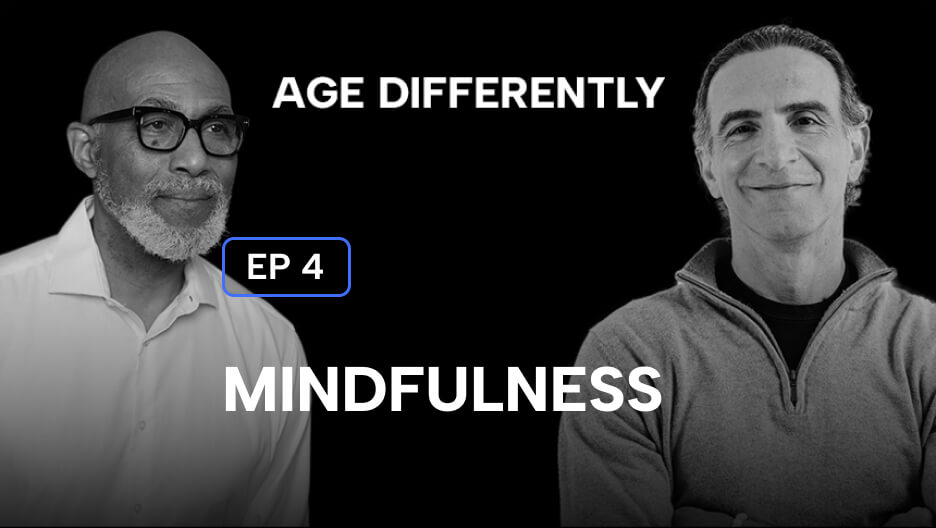
EP 4

Mindfulness

Truly motivational podcasts for men are few and far between. But there is so much out there to motivate and inspire [w]holistic health in men. In this episode, Darius and Peter delve into the importance of mindfulness, exploring present moment awareness, its misconceptions, and truths. They discuss various ways to incorporate mindfulness into day-to-day living, explore how to train our mind and examine the impact of emotional imprints and fear on our behavior. Sharing powerful personal experiences of healing through mindfulness, they underscore the importance of choice and close with a poem by John Kabat-Zinn. You’ll finish the episode motivated to embrace mindfulness in your own life.

Key Points
  • Mindfulness is about being present in the moment, paying attention on purpose, by choice, moment to moment, without judgment and in a particular way.
  • The practice of mindfulness, including meditation and mindful movements can help individuals become aware of and manage their internal experiences, such as thoughts and emotions, leading to a more balanced life.
  • Exploring and understanding one’s underlying belief systems through mindfulness can lead to acceptance and better decision-making, allowing for personal growth and a more fulfilling life.
Automatically Generated
Darius
Welcome everybody to the latest podcast 50 to 70 Meaningful Conversations Between Men. I'm here with my good friend, Peter Calin.
Peter
Hey Darius, how you doing?
Darius
Did I pronounce your name wrong?
Peter
No, you pronounced it fine.
Darius
Oh, wonderful. I always sometimes think “Is it Callen or Caelin?” but I got it right. So, it's so good to be here.
Peter
It's my pleasure. It's always fun for us to get together and share a meaningful conversation with our audience. And today's topic, as you know, is one that's dear to my heart.
Darius
Yeah. This is one of those ones where I've only seen farther because I've sat on the shoulder of a giant and that in my mind is you, as today, we're talking about mindfulness.
Peter
Well, you're too kind. I often say, it's not about me, it's about what's already inside of you. And I've learned that from my practices and my studies of the concepts that are inherent to mindfulness, and I'm delighted to be able to share that with the audience today.
Darius
Peter, why do you think it's important that we dedicate a full episode on mindfulness?
Peter
It just has concepts of wisdom that could be, inculcated, incorporated into the lives of our listeners, into the lives of any human, to allow for them to choose to make their life more joyful, more abundant and perhaps with less suffering, less pain. And so having seen that, having now for over a dozen years worked with individuals 1-on-1, taught, mindfulness-based stress reduction classes, had my own practice of meditation, had a practice of yoga, and study of yoga that started even before I moved into this arena of mindfulness, all of that has allowed me to observe and witness potential benefits that comes from these concepts. That is the science, is the art, is the essence of what mindfulness is and It's been around for a bit.
Darius
Yeah. So I think for this episode, mindfulness is a construct that is a little more a concept that's a little more abstract. It's not as well known, yet, as some of the other things that we've been talking about. So I think it would be helpful if we were to take a step back and define what mindfulness is so that everybody has that understanding of what it is that we are talking about. From there, I think we should share how we each found mindfulness because it was different journeys to get there.
Darius
I'd love to share and hear about your experience with mindfulness and the impact that it's had on your life and the lives of those around you. Talk about how we've incorporated it into our day to day lives as well as the struggles because, like any practice, there has to be challenges, there has to be struggles to continue to grow.
Peter
Yes.
Darius
So let's start off, Peter. How do we define mindfulness for the listener that is hearing the word mindfulness for the first time or has heard it in the media or heard somebody talk about it, but there's no clue what it is we're talking about?
Peter
Yeah, mindfulness has become quite popular in the vernacular, the modern western vernacular. People view it as meditation, or they think of it as maybe mindful movements. But primarily, I feel like most people simplified it to meditation and it's much more profound than that. Those are aspects of it.
Peter
But mindfulness can have an impact, not only in your capacity to calm yourself and relax yourself, but also to ease your experience in your life that maybe currently causes you stress and anxiety, causes you pain. And so mindfulness has a capacity for that. But it's not because mindfulness is something external to you. It's because it's awakening what's already in you.
Darius
So what is mindfulness?
Peter
Mindfulness is paying attention, on purpose, and I like to say, by choice, moment by moment and without judgment.
Darius
Paying attention, on purpose, by choice, moment to moment, without judgment.
Peter
Yeah. And I left out in a particular way.
Darius
In a particular way. So how did you come to start practicing mindfulness? What was your initial introduction to it?
Peter
Indirect, an undercurrent in my life that began when I was fifteen and maybe prior to that, but something awakened when I picked up a book on yoga. My intention at the time was to use yoga, and this was intuitive, to stretch and prevent injuries. I was a young budding aspiring athlete. And I thought, and I'm not sure why, this yoga stuff might help.
Peter
Now an interesting aside is that now professional athletes are hiring yoga instructors to help them reach their optimal, physical well-being. But I took it at the time and, no, this wasn't back at the time when they wore leather helmets, they actually wore the hard case ones, and I started using it and it had benefits right away. I had fewer injuries and I found myself having a kind of tenuous strength like the cables of the San Francisco bridge.
Peter
And it wasn't just bulk strength anymore and I felt the difference right away. It was just something that brought it to my attention. But that wasn't where I stopped. I started looking and studying a little bit more about what yoga was historically and what the history and science was.
Peter
And it fascinated me how yoga spoke about the mind. It talked about heart and emotions. It spoke about how the experience, the human condition and the afflictions we suffer. I was just fascinated by all of that stuff and then came to learn later that Carl Jung and Sigmund Freud, both did quite extensive study of yoga.
Peter
Carl Jung has a number of essays on yoga that were published and those two men are considered the father of psychology. And so that kinda gives you an indication of the profundity of the information, the knowledge that was in yoga. And that remained an undercurrent for me my entire life. Eventually, I mean, through circuits of playing in college, doing other sports, doing triathlons. It was a constant. I used it to stretch before stretching was a popular thing to do. I used it to sit and be still sometimes. Like we see professional athletes like LeBron James do now.
Peter
Sometimes they just sit and they focus. What are they doing? Is that called meditation? It's something that I was doing ages ago, and I didn't know what to call it. It was just something that made sense. It was part of the practice of yoga and so that was, again, a thread that wove through the fabric of my life and eventually it led me to teach yoga and circuitous. I was studying, as I said, one of the earlier episodes for my doctorate in human rights and I segued off of that path and started teaching yoga and just allowed myself to be taken by it.
Peter
And it's brought me to where I'm at now, after going through studies and getting certified to teach mindfulness based stress reduction and learning more about mindfulness and what it means and how it works.
Darius
So present moment awareness.
Peter
By choice.
Darius
By choice. In a particular way, moment to moment without judgment.
Peter
Yes.
Darius
Why without judgment? Any thoughts? We talked about this.
Darius
I had a question for you, though. It all sounds simple, but it really isn't that simple.
Peter
No, it’s not. We live in a world, environments, we live within a human condition where we are constantly distracted by our thoughts, by our feelings, even though we're not always aware of our feelings, and our emotions. By the physical experiences we're having, and we're not paying attention. And so mindfulness encourages, intends for you, to pay attention.
Peter
Why? So that you can be present. Not in rumination over what if, what could have, what should have, regretting, fretting. And not in the future, usually forecasting because of your worries, your doubts, your fears. Oh, something dire's about to happen.
Peter
No. Mindfulness, through practice, encourages you to just be present so that you can be here now recognizing that there's not the pain of the past or the worries of the future in this moment, but rather there's joy here, I mean, there's enough challenges without bringing the challenges from yesterday or tomorrow.
Peter
And so mindfulness helps with that. I'll say one other thing, Darius. The essence of mindfulness is being aware and, in more common language, being attendant and paying attention. And then from there, choosing to be present.
Darius
Yeah, it's interesting because when I first learned mindfulness from you, being aware, I misinterpreted and what I mean by that is, I thought initially it was being aware of what was going on around you. It was noticing the colors, feeling the air, seeing the people and engaging with the people. But as I've started the practice, I realized that's half the coin
Darius
The other half is to become aware, maybe even more than half of what is going on within you, not just physically listening to the body and what the body is trying to say, but feeling the emotions, acknowledging those emotions and not simply stuffing them down. Acknowledging the thoughts and whether those thoughts are ruminations or worry about the future, also known as anxiety. It is noticing where your head is, where your heart is, where your body is, and then making a conscious choice to either: You know what? I'm gonna go off on this flight of fancy! That there's gonna be, I'm a big surfer, there's gonna be head high waves, and I'm not gonna have to wear a wetsuit in New England. I'm gonna be great, not worry about sharks. Or I'm gonna say: “Okay. That's not productive right now. Let's bring the mind back. Let's bring the body back to where we're at. And let's move forward.”
Peter
Yes. Exactly.
Darius
Yeah, so that present moment awareness, again, such a simple definition but so easy to misunderstand.
Peter
Yes. It is. And you're able to because of that practice, you're able to enjoy your surfing rather than worrying about the sharks and the waves and everything else. Exactly. So this is a great example. There's always gonna be the challenges. Life is full of challenges.
Darius
So what are some of the challenges?
Peter
This, like I mentioned, the challenge of just choosing to be here and living your life now and not regurgitating the experiences of pain from the past or worrying about the future and the uncertainties. Those always exist. Those challenges will be there. But there's also moments of a smile, maybe on your child's face or a friend's face, the touch. And if you're not present with that, you'll miss that.
Peter
That's what mindfulness is intended to do. It's kinda practical, in that way, it's not, you know, some higher consciousness raising exercise, even though that can happen, it's actually quite practical. And that's what I often try to share.
Peter
It’s not about, again, being calm or relaxed. There's so much more there. It's about having the balance, the capacity to become balanced, when you're in a difficult situation, when you're feeling stress, when your mind is off on a tangent and your heart is like a tidal wave, overwhelming you, you can bring yourself back through these practices. This is just noticing it. Noticing all these things I just mentioned.
Peter
Your mind is just racing. You can't stop. Your heart is overwhelming you with feelings in your gut. Your body maybe even has sensations, but you have the capacity through the practices you've been doing. Meditation, but meditation is nothing more than just paying attention. Yep. So is moving meditation.
Darius
Moving meditation, walking in yoga. Yes, I can give you an example this morning when I was at the gym. My mind was not in my workout. It was everywhere else, but right in front of me. So I managed to get through it, I was conscious of it. Choose to get through it and when it came time at the end of every workout, I'll stretch for half an hour.
Darius
I put my phone away. I shut my eyes, and I just started breathing and focused on the breathing and feeling the body and with me, it doesn't happen instantly. It takes a little bit of time to come back in, to recenter as I call it, or to just come back in the body and become aware of everything. But within 8 or 10 minutes, I was again feeling the body.
Darius
I was back in the moment. I wasn't thinking about the stream of conscious or subconscious chatter that my mind was throwing at me to distract me from the pain of the workout that I was going through.
Peter
Yes, and that's just one example.
Darius
Absolutely.
Peter
Constant distractions that we're experiencing. Each and every one of us. I mean, you named that one.
Peter
I can name some where I'm just waking up in the morning, and I just feel like oh, my, my joints ache, I feel this 70, and then I remind myself, it's just a moment.
Peter
And that comes with practice. It just doesn't happen, and I wanna impress that on the audience. It takes practice; practicing being attentive and present with the moment. And meditation helps with that. And like you said, the mindful movements. So that's when I'm able to get up, sit on the edge of the bed instead of rushing to check my email or check my text or figure out what's next on my to-do list.
Peter
I pause for a moment. I take a breath.
Darius
So you asked why “without judgment” earlier?
Peter
Yes.
Darius
Because it's acceptance. We need to accept where we are at right now. Let's take the achy joints. We're men 50 to 70, I would go out and say the vast majority of us have some kind of ache or pain that we are waking up with. So we need to be in the moment and not judge that this is good or bad or absolute. It's always going to be like this.
Darius
So I can't do x, y, and z. This is how it's feeling today. I now have choices that I can make.
Peter
Yes.
Darius
Shall I have a hot shower? Shall I have a sauna? Shall I go to the gym? Shall I ride the bike? Do I need to call a chiropractor?
Darius
Should I get a massage? Or should I drink a lot of alcohol and have some anti inflammatories. Right? There's all choices that can be made in response to where you're at. And it's the judgment, “This is bad, it's always going to be like this,” that then creates, at least in my experience, that negative cascade in the mind that just continues versus accepting: “In this present moment, here is where I am.”
Darius
Now how am I going to move forward?
Peter
I'll share with you, and it's not something I often do with classes I do when I'm privately working with individuals, your mindset is so important. You know, you mentioned Victor Frankel in his book in our last episode and, you know, his focus was on staying positive and finding the positive even in the midst of a horrendous experience in the Holocaust and death and dying.
Peter
And that mindset is something that can be cultivated with the practice of mindfulness as well. You know, not bringing your judgments, having patience, having a beginner's mind, waiting for things as if it's the first time rather than introducing your biases and your conclusion and there's just so much more to this that is beyond just meditating.
Darius
But when you get to mindset, you're opening Pandora's box in my mind. And the reason I say that is because how does one get to a mindset? One gets to a mindset based on an underlying belief system.
Peter
Yes.
Darius
That may or may not be conscious. And where those beliefs enter the psyche, how they take up residence in the psyche, can be incredibly profound.
Peter
Yeah. Usually traumatic. And if not traumatic, strong enough to leave a deep imprint in your psyche. And that imprint is, the way I describe it, let's say you fell. And you scarred yourself. The scar would heal. So your body can kind of resilient has a resilience to balance the immune system again. Your mind will process the fact that, you know, you experienced this pain. It was not comfortable. You don't wanna repeat it.
Peter
And so you have some memories, but memories fade. Let's say you had fear, anger or you fear the occurrence of falling again. That emotion of fear, my experience, and I welcome the audience to again, be your own lab and be your own observer, your own witness, and see if any of this is true for you.
Peter
That fear doesn't seem to ever go away. Now it doesn't show up the same way. It's not like every time you're, like, walking down that same pathway you're thinking, oh, I'm afraid I'm gonna fall. Even though that may be true.
Peter
No. My experience is that fear, anger, guilt, shame, they have, like, a ripple effect and that ripple effect dictates your behavior in the future because you're on autopilot.
Peter
“I gotta be careful, I gotta watch out, or this is really pissing me off!” And you're not sure why, but that's what you're feeling. And then you start thinking, let's say, you're in front of somebody having a conversation, “I don't like that tone of voice.” You don't recall that maybe you had a confrontation with somebody who used that tone of voice. This is just an instance, an example, and you got really pissed off, angry, maybe even had a fight and that's what you're hearing in this moment, but you can't separate, because the feeling doesn't distinguish. It just feels like the same as that moment. And mindfulness for me, my experience, and some that I know, has helped me be aware of this and how prior experiences, traumas included, affect the present moment, and we're not aware of it.
Darius
And I think part of it is consciously or subconsciously, we are recreating that prior moment, that trauma so that we can hopefully learn from it, heal, and move on.
Peter
Yes.
Darius
However, If we're not cognizant of what is going on, if we haven't looked for what I I've heard called the “source fracture”, that initial trauma, well, then you're just gonna keep repeating it ad nauseam and, you know, it becomes a definition of insanity. But I noticed you're wearing your Michigan hat, I was wondering if there's a story that you might wanna tell as we get back to beliefs in the insidious nature of beliefs.
Peter
So you didn’t think the “M” was for mindfulness?
Darius
No, but it's actually a great way. We could Jim Harbaugh right now and say, we're gonna rebrand Michigan.
Peter
Yeah. Well, I wore the hat, kind of as a reminder, to share how this practice of mindfulness has helped me personally. Mindfulness, as we just discussed, helps you be aware and pay attention. And let's say be aware of an experience and emotion generated from the past and how it has had a ripple effect in your life, or is having an effect today.
Peter
One of the things mindfulness helped me with is: I was a scholarship athlete at the University of Michigan and in my first year there, my high school girlfriend gave birth to my oldest son. I was seventeen and they came out my sophomore year, but I eventually transferred from Michigan. There was just too much going on for a 17/18 year old to be able to kind of figure out how he felt about it, how he would manage it.
Peter
And I thought I was doing the best I could. I was practicing Victor Frankel even in those days trying to be positive. I'll figure this out, I'll solve this problem. It's been kinda how things had been.
Peter
And I left and I went to Temple and I then went to graduate school. You know, got my law degree, as I mentioned, business degree. Got some more degrees later. It felt like not enough. It always felt like it wasn't good enough.
Peter
And also, I realized after developing that capacity to pay attention and be aware of how I was feeling, being more mindful, I had an undercurrent in my life, almost from those days, of being angry.
Peter
I was angry my life didn't turn out the way I wanted to. I wanted what I wanted when I wanted, how I wanted it. Does that sound familiar to any of you? I think a lot of people can relate.
Peter
And it felt like my dreams had just been smashed and I constantly kept proving to myself that I was good enough. There's a sign at the tunnel entrance at the University of Michigan stadium: “Those who stay will be champions.” and I never forget that. And I think to this day, I would be suffering this anger, If a couple things hadn't happened. God bless his soul, but Frank was the captain of the undefeated Michigan team that I was a part of in 1971/1972 and they had reunions. I never went back because I felt I wasn't part of that, but he kept insistently trying to get me to come, and one year I did.
Peter
And what he said to me is “You put in the blood and the sweat of practice for two years and you helped create this as well. You need to come. You're part of the family.” And so that helped me, it allowed me to feel the anger. It allowed me to put it in context in the time frame in which it existed and I was mindful of how it was affecting me in my current life and that I had a choice. And I started making a choice not to let it continue to create residue and experiences in a life that has just been, I feel so blessed. I have, as I said, four beautiful children, a beautiful wife, done well in terms of academics, career, and so launching a podcast at 70. Imagine that. And so that's why I'm wearing my Michigan hat today.
Darius
That's a wonderful story and it just goes to show, Peter, how those small things that may have not been said to you, but that you picked up from somebody in your family, one of your friends, become internalized and continue to manifest in ways that you don't see. It's been, what, two years now since I've taken your class?
Darius
And I'll tell you three words that stick with me from that class: “If you choose.” You're the author of your own book. You're the actor of your own play. You get to choose how you wanna move forward, and we can't go back to the past and change events that have transpired.
Darius
It's just not not possible right now. However, we do get to choose what our next step forward is going to be. If that's picking up the phone and telling somebody you've been talking to, “Hey. I love you. I miss you. We should talk more.” If it is doing something kind for somebody in your life or if it's taking care of yourself, letting go of those feelings, the anger, the guilt, the shame, the regret. If they're not serving you, where did you learn that? And how's it working out for you?
Darius
Right?
Peter
Yeah. Where'd you learn that? That’s crazy. Oh, and, you know, so much of the capacity to discern “where did you learn that?” and how it's serving you comes down to paying attention. And this is the oddity. This is an odd example, not so odd once I've I believe you become aware of it, but it shows the power of mindfulness and the power of meditation. I mean, there's all these scientific explanations, but just from a practical perspective, which is what I've learned to share. It can make such a huge difference in someone's life so that they can be here in their own lives.
Darius
So, mindfulness is a great construct, but there's gotta be some foundational attitudes that lead up to mindfulness or the components. What are those?
Peter
There's non-judgment. And that's because judgments come from your experiences in the past and your perceptions of things that have happened or you've seen a witness in the past. There's patience. There's trust. And patience is really an example of being present. It’s really an example of being present because if you're impatient, you don't wanna be here. You wanna be in the next moment or you wanna be someplace else. So if you can develop this foundation, these are also like attitudes. And I've mentioned these are mindsets as well.
Peter
And I think the approach of a mindset may be more helpful. There's trust and trust is trusting yourself. Trusting that you know more than you realize and maybe you know especially more about you than you've been told.
Peter
And beginner's mind, as if for the first time experiencing each moment fresh and new. If you ever watch a child, how their curiosity allows them to find joy in moments and maybe the next moment, they're sad. They fell down.
Peter
They scraped their knee, and then moments later, they're back to joy because they're just able to stay with the moment. They're not saying to themselves, oh I scraped my knee and now I have to be unhappy the rest of the day. No.
Peter
That's a beginner's mind and then there's, non-striving and that's one that's difficult for our modern society because we have checklists. We have ambitions, we have goals, we have dreams.
Peter
I've come to, and this is for each in our audience to explore, I've come to define non-striving as finding the flow. So have your ambitions, your goals, but don't strive only to get what you want, when you want and how you want it.
Peter
Maybe you're swimming upstream and it's not taking you where you need to go. Others are generosity and gratitude. Gratitude being very powerful in terms of our modern day because it gives us a segue from the distraction of negative thinking and negative feelings. It can be a pause where you can say, I'm thankful for this, I’m thankful for that, I'm thankful for this breath.
Darius
So as we come up on time right now, Peter, what's our call to action for people that have listened to this podcast on mindfulness introducing the construct and the concepts?
Peter
To learn a little bit more about what this mindfulness is, maybe take an MBSR class, maybe take a workshop on mindfulness, read a book, and then see where it takes you. See what you notice, see what benefits you, and paying attention the way that we're talking about you'll notice what's different about you, about your experience with life, and it may encourage you to practice more. So that's the call to action: learn more about this mindfulness and how in practical ways it could benefit you.
Darius
Yeah, I would give a second one, which is if you're not ready to jump in, at least dip your toe in. Go for a walk outside
Peter
Thank you.
Darius
With no headphones, no distractions, just walk, breathe, and it doesn't have to be long five, ten minutes and see how you feel afterwards.
Peter
Yeah. Thank you for that, Darius.
Darius
So we're gonna post this on agedifferently.com, but we'll love your feedback and comment as usual. We're gonna conclude with a poem that Peter will be reading this, this episode.
Peter
“Have you ever had the experience of stopping? Just stopping so completely. Of being in your body so completely. Of being in your life so completely. That what you knew and what you didn't know, that what had been and what was yet to come. And even the way things are right now, they no longer hold even the slightest hint of anxiety or discord. That— it—would be a moment of complete presence. Beyond striving, beyond mere acceptance, beyond the desire to escape, flee or fix anything or plunge ahead. It would be a moment of pure being. No longer in time. A moment of pure seeing. Pure feeling. A moment in which life, it simply is. And that is-ness, that is-ness grabs you by all your senses, all your memories, by your very genes, by all your loves, and it welcomes you. It welcomes you back home.”
Darius
Wonderful, poem Peter, who wrote that?
Peter
That poem is by the founder and creator of mindfulness based stress reduction. The person who introduced mindfulness to the United States: John Kabat-Zinn.
Darius
Wonderful. Well, thank you everyone for listening and stay tuned for our next episode. Appreciate you guys all so much.
Peter
Yes. We do. Everyone take care. Be mindful of you, please.
Darius
Thank you, Peter.

Disclaimer

The “Age Differently” website and associated podcast (the “Podcast”) is intended for educational, entertainment, and informational purposes only. The Podcast is not intended to provide medical advice, diagnosis, or treatment of any health problem or disease. There is no doctor-patient relationship between you and anyone appearing on the Podcast. Always consult with your doctor or other qualified healthcare provider regarding any and all medical decisions. Do not disregard any medical advice or delay consulting with a health professional because of anything you hear on the Podcast. If you think you may have a medical emergency, call 911 or go to the nearest emergency room immediately. Any claims about possible health benefits conferred by any foods, supplements, or activities discussed on the Podcast have not necessarily been evaluated by Food & Drug Administration or any other institution or regulatory body. The ideas and opinions expressed on the Podcast are personal to the individuals expressing them, and do not represent the perspective of any other person or institution. The Podcast is provided on an “as is” basis and with all faults. Neither the company nor its employees, nor any contributor to this website or podcast, makes any representations, express or implied, with respect to the information provided herein or to its use. Any reliance on information discussed on the Podcast is entirely at your own risk, and no one who appears on the Podcast shall be liable for any resulting losses or damages.

Read More

image

Our Newsletter

Reflections, reminders, new episodes, and tangible applications delivered to you.

Loading